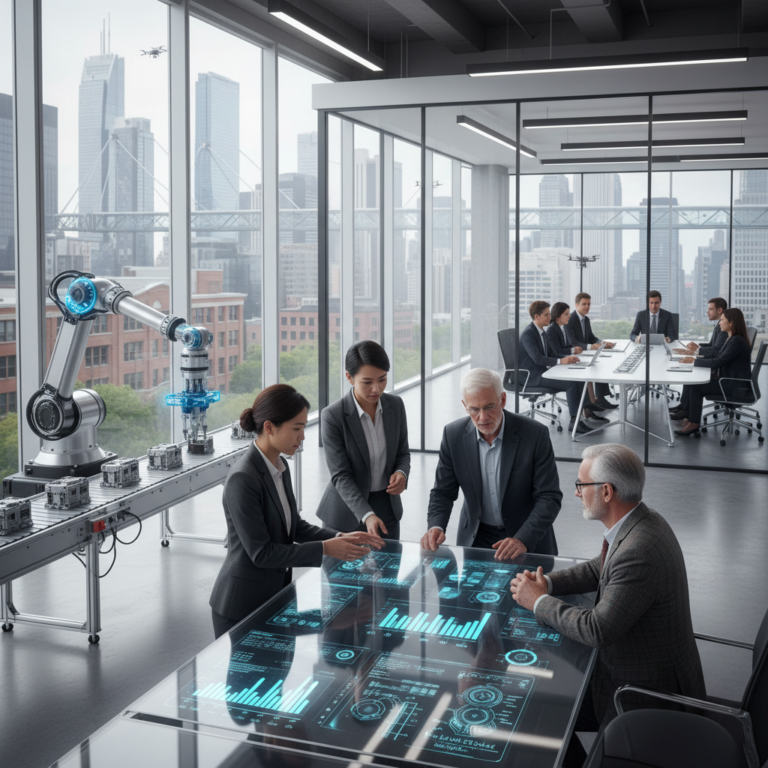
Robotics Revolution: Transforming Our Lives from Warehouses to Living Rooms!
Summary
The robotics revolution is transforming multiple facets of human life, from industrial warehouses to domestic living spaces, driven by rapid advances in artificial intelligence (AI), machine learning, and automation technologies. This ongoing shift marks a significant evolution from early mechanical automata and fixed industrial machines to sophisticated, autonomous robots capable of complex tasks and dynamic interaction with their environments. The integration of robotics into warehouses has optimized logistics and fulfillment operations, enhancing speed, accuracy, and operational flexibility while reshaping workforce roles. Meanwhile, domestic robots have progressed from experimental novelties to practical household assistants, offering cleaning, security, and companionship functions that are increasingly accessible to consumers.
Warehouse robotics exemplify the impact of AI-driven systems, employing autonomous mobile robots (AMRs), advanced vision, and sensor fusion to navigate complex and changing environments in real time. These technologies enable more efficient inventory management and order fulfillment while facilitating collaboration between humans and machines, thus augmenting productivity and safety. In parallel, the consumer market for domestic robots has grown, although adoption faces challenges related to privacy concerns, sustainability, and social acceptance. Advances in human-centered design and adaptive AI are helping to address these issues, fostering improved usability and acceptance in home settings.
Technological breakthroughs such as reinforcement learning, swarm robotics, and edge computing are driving new capabilities that allow robots to operate autonomously at scale and with greater coordination, heralding a potential “ChatGPT moment” in robotics. However, the rapid expansion of robotics also raises economic and social considerations, including workforce transformation, ethical questions, and the need for interoperability among diverse robotic systems. These factors underscore the importance of balancing innovation with responsible deployment to maximize societal benefits.
Looking ahead, the robotics revolution promises continued growth fueled by AI integration, enhanced human-robot collaboration, and sustainability initiatives within industrial and domestic spheres. Ongoing research into physical human-robot interaction and social robotics aims to improve user experience and broaden adoption, especially in assistive and service applications. As robotics technologies become increasingly embedded in everyday life, they are poised to reshape productivity, social interaction, and quality of life worldwide.
Historical Background
The concept of robots has deep historical roots, tracing back to the ancient world and early automata designs. Notably, in the 13th century, artist-engineer Villard de Honnecourt sketched plans for several mechanical automata, while Robert II, Count of Artois, incorporated humanoid and animal robots in a pleasure garden at his castle in Hesdin. The Renaissance era further contributed to early robotics concepts, with inventors like Leonardo da Vinci imagining automated mechanisms that would influence future developments.
The Industrial Revolution, spanning roughly from 1760 to 1840, marked a pivotal moment in robotics history. During this period, advancements in structural engineering and electricity enabled machines to be powered by small motors, allowing the creation of robots designed for material processing and manufacturing. These industrial robots were initially simple, fixed machines that performed repetitive tasks, reducing the need for human labor in factories. The automotive industry became a key pioneer in adopting such robotic applications, further expanding their role in manufacturing and warehousing.
The 20th century saw significant progress with the emergence of digitally programmed industrial robots. The first commercial programmable robot, the Unimate, was built by George Devol in 1954, paving the way for modern automation. Since the 1960s, industrial robots have been increasingly integrated into various sectors, benefiting from developments in digital control, sensing, artificial intelligence, and automation technologies.
Simultaneously, the idea of domestic robots began to take shape. The 1980s and 1990s witnessed initial attempts to bring robots into homes, although early models were often limited in capability and accessibility, serving more as novelties than practical devices. One notable early domestic robot was “HERO,” sold during the 1980s, representing some of the first efforts to integrate robots into everyday living spaces. Over time, these early innovations laid the foundation for more advanced and affordable domestic robots that are now becoming increasingly common in households.
This historical trajectory from ancient automata and Renaissance inventions through industrial revolution-era machinery to modern digital and domestic robots highlights the evolving role of robotics in society. It underscores how technological advancements have transformed robots from simple mechanical devices into sophisticated machines integral to both industrial operations and daily human life.
Robotics in Warehouses
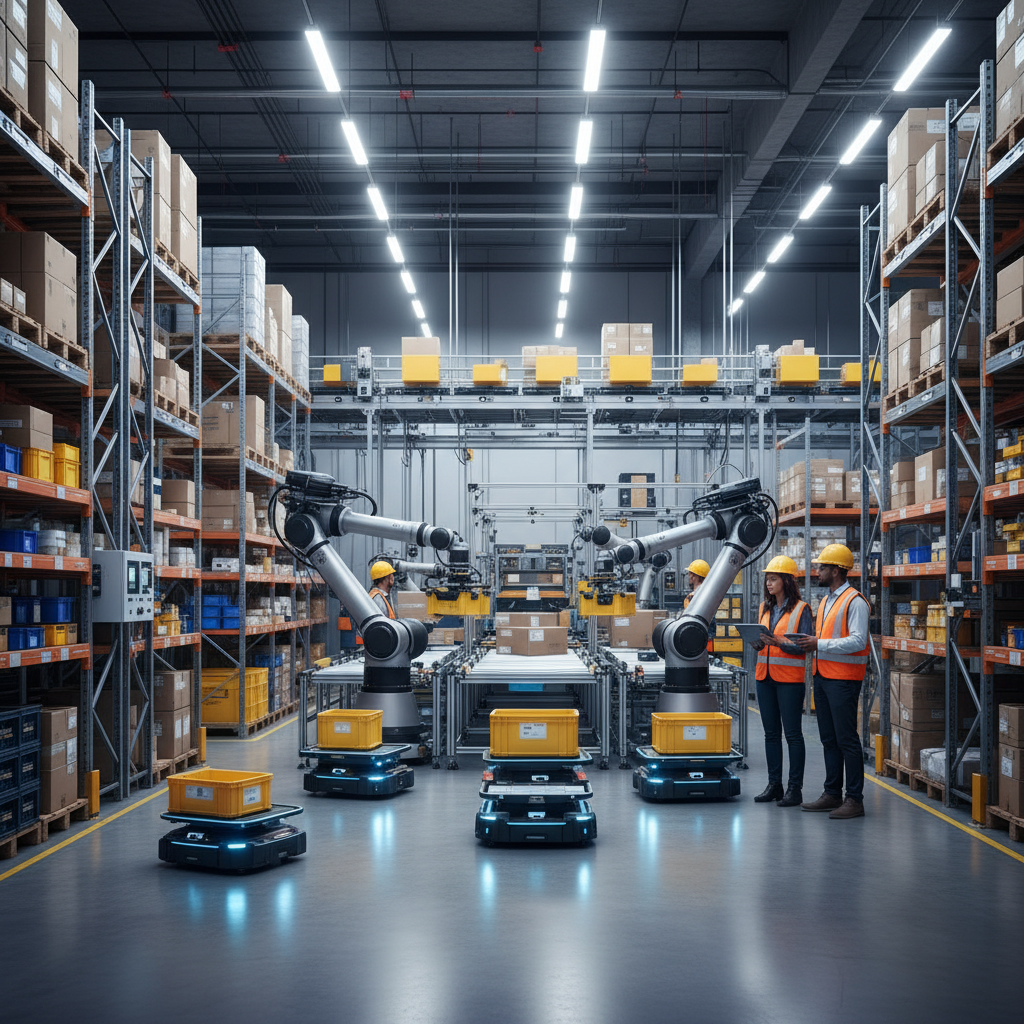
Robotics has become a fundamental component of modern warehouses, revolutionizing how goods are received, stored, and shipped. The adoption of robotic systems—including autonomous mobile robots (AMRs), robotic arms, and AI-driven sorters—has transformed warehouses into smart, highly efficient hubs capable of meeting growing consumer demands and optimizing logistics operations.
Evolution and Integration of Warehouse Robotics
Over the past decade, a democratization of robotic hardware has driven rapid advancements in warehouse automation. Industrial actuators, advanced sensors, and control systems that once came at high costs are now more affordable and widely accessible, enabling broader adoption of robotic solutions across warehouses. Amazon’s acquisition of Kiva Systems in 2012 exemplified early large-scale integration of robotics, with their robots dramatically enhancing fulfillment speed and accuracy. Newer entrants and technologies have since emerged to expand and diversify warehouse automation.
Robotic systems today handle core warehouse operations such as inbound de-palletizing, transport, and outbound fulfillment. These systems manage mixed pallets and irregular items with advanced gripping technologies and operate alongside human workers to enhance productivity rather than replace them.
Autonomous Mobile Robots and Navigation Technologies
A key technology in warehouse robotics is the autonomous mobile robot (AMR). Unlike automated guided vehicles (AGVs) that follow predetermined routes, AMRs independently navigate complex warehouse environments using machine learning, artificial intelligence, and sensor fusion. These robots can dynamically adjust their paths in real-time to avoid obstacles, blocked aisles, or newly placed inventory, significantly improving operational flexibility and efficiency.
Robots equipped with advanced vision systems and AI algorithms can classify obstacles, recognize surroundings, and adapt to frequently changing layouts and moving obstacles such as pallets and human workers. This capability is crucial in the dynamic, cluttered settings of warehouses where static navigation paths are impractical.
AI and Machine Learning Enhancements
Artificial intelligence further enhances warehouse robotics by enabling real-time decision-making, predictive analytics, and continual learning. Reinforcement learning algorithms allow robots to optimize picking routes and adapt behavior based on sensor feedback and environmental changes, maximizing throughput and minimizing travel times. Neural network architectures have been developed to efficiently manage the trajectories and coordination of hundreds of robots simultaneously, improving large-scale warehouse operations.
Edge computing solutions facilitate local data processing, reducing latency and enabling faster, more responsive robotic actions within warehouses. AI-driven systems also contribute to improved accuracy and reduced human error through sophisticated data analysis and machine learning models, resulting in smarter and more adaptable warehouses.
Benefits and Workforce Implications
The integration of robotics in warehouses significantly streamlines workflows, reduces operational costs, and increases throughput by providing round-the-clock efficiency. Robots manage critical tasks including inventory management, picking, packing, sorting, and even loading and unloading, thereby maximizing existing facility capacities without the need for physical expansion.
While robotics improve productivity, they also shift workforce demands toward technical skills. Workers are increasingly required to collaborate with AI systems and manage automated processes to ensure smooth operations. This collaboration enhances overall efficiency and leverages the complementary strengths of humans and robots working together.
Robotics in Domestic Environments
The integration of robotics into domestic environments has evolved significantly since the 1980s, transitioning from rudimentary experimental devices to sophisticated, multifunctional home assistants. Early domestic robots, such as the Heathkit HERO series introduced during the 1980s, represented pioneering attempts to bring robotics into everyday living spaces. HERO JR, for instance, was notable for being an affordable personal robot with a dynamic personality capable of playing music, engaging in games, waking people up, notifying important events, and even providing home security. Despite their novelty, these initial robots had limited functionality and were often inaccessible to the broader public due to high costs.
The commercial breakthrough in domestic robotics came with the advent of robotic vacuum cleaners, the first of which appeared in 1996. The iRobot Roomba, introduced shortly thereafter, became the first robot vacuum in the United States and the second worldwide after Electrolux’s Trilobite. The Roomba’s simple bump-and-roll navigation system, coupled with sensors to avoid obstacles and prevent falls, allowed it to autonomously clean floors effectively. Over time, iRobot expanded its product line with specialized cleaning robots such as the Dirt Dog for shops, and the Looj and Verro for gutter and pool maintenance, respectively.
Consumer adoption of domestic robots continues to be influenced by a complex interplay of technological, social, and psychological factors. Research on human–robot interaction indicates that privacy concerns pose a significant barrier to purchase intent among mainstream consumers, although early adopters tend to be less deterred by such issues due to a greater willingness to accept risk. Additionally, social robots that offer companionship and emotional engagement have attracted interest for their potential to improve users’ well-being and mood, further driving acceptance and adoption.
Technological advancements in artificial intelligence and machine learning have enhanced the capabilities of domestic robots, enabling real-time decision-making, adaptive navigation, and improved task execution. These innovations allow robots to dynamically adjust cleaning paths, recognize objects, and operate continuously with minimal human intervention, thereby increasing efficiency and user satisfaction. The development process often follows human-centered design principles to ensure that robots meet user needs and function effectively in real-world household scenarios, employing iterative prototyping and user feedback for refinement.
Despite the progress, the market for domestic robots faces challenges related to consumer attitudes toward sustainability and product lifecycle. Studies highlight the importance of designing durable, repairable, and recyclable robots to support circular economy principles. Moreover, consumer behavior regarding the purchase of new versus second-hand robotic systems plays a critical role in shaping industry practices and adoption rates.
Technological Advances Driving the Robotics Revolution
The robotics revolution has been propelled by significant technological advances across multiple domains, enabling robots to transition from simple mechanized tools to intelligent systems capable of complex, adaptive behaviors. Early developments such as the introduction of robotic arms in assembly lines during the 1980s greatly enhanced manufacturing efficiency and safety. The 1990s saw progress in computer vision and machine learning, laying the foundation for robots to better perceive and interact with their environments.
The turn of the millennium marked a leap forward with advancements in artificial intelligence (AI) and machine learning that allowed robots to recognize and respond to human emotions, facilitating the emergence of companion and assistive robots. More recently, the integration of Physical AI, where robots train in simulated real-world environments, is transforming traditional industrial and service robotics by enabling experience-driven operation rather than reliance on explicit programming. This approach is anticipated to create a “ChatGPT moment” for robotics, greatly enhancing adaptability and autonomy.
AI-driven decision-making has become central to the latest robotic systems, especially in dynamic and complex environments such as warehouses. By 2026, modular robotic systems capable of scalable deployment are expected to perform sophisticated tasks including managing exceptions in order fulfillment and adapting to unforeseen supply chain disruptions autonomously. The coordination of multiple robots as fleets, through swarm robotics, optimizes workload distribution and route planning, increasing throughput and flexibility.
The democratization of robotics hardware, driven by dramatically reduced costs for actuators, sensors, and control systems, has also accelerated innovation and accessibility in the field. Coupled with this, encapsulating complex AI functionalities into user-friendly software solutions allows automation engineers beyond niche experts to implement advanced robotics systems effectively. Enhanced vision systems and AI algorithms enable robots to recognize surroundings accurately, navigate dynamically changing obstacles such as moving pallets and people, and adjust paths in real time using reinforcement learning and sensor fusion techniques.
Reinforcement learning algorithms play a pivotal role in optimizing robotic operations by continuously adapting behaviors based on sensor feedback and environmental changes, thereby minimizing travel time and maximizing efficiency in tasks like picking and sorting. The use of consensus algorithms in multi-agent systems facilitates coordinated movement to avoid collisions and bottlenecks in congested settings, reflecting a sophisticated level of autonomous cooperation.
Assistive robotics, although still facing challenges related to personalization and technical readiness for home use, is poised to benefit from these AI advances. By focusing on human-centered design (HCD) principles and iterative development involving end users, new generations of assistive robots aim to provide tailored physical support that adapts to individual preferences and living contexts.
Economic and Social Impacts
The integration of robotics into various sectors has brought significant economic and social changes, influencing labor dynamics, consumer behavior, and everyday life. In industrial and warehouse settings, robots have enhanced efficiency, safety, and precision by automating complex and repetitive tasks. This transformation has led to concerns over job displacement; however, many roles are evolving rather than disappearing. Workers are increasingly retrained as robot supervisors, data analysts, or exception managers, which helps address labor shortages and improves employee retention. The emergence of collaborative robots, or cobots, further emphasizes human-robot cooperation by assisting workers with physical tasks and sharing duties to maximize productivity, especially in manufacturing sectors like automotive and electronics.
Economically, the adoption of robotics involves substantial upfront investment, but long-term benefits such as labor cost savings, enhanced productivity, and improved product quality often justify these expenses. Advanced technologies including 5G connectivity, IoT integration, and edge computing have enabled more autonomous warehouse operations, while AI-driven robotics optimize workflows through real-time decision-making and predictive capabilities. These advancements contribute to smarter warehouses that can dynamically adjust to market demands and customer preferences, resulting in reduced operational costs and increased throughput.
In domestic settings, social robots (SHRs) present unique challenges and opportunities. Consumer acceptance of SHRs is influenced by perceived benefits such as emotional and instrumental support, trust in the technology, and concerns over privacy risks related to information and relationship security. Early adopters tend to weigh privacy concerns less heavily than mainstream consumers, often due to their higher risk tolerance, but privacy remains a critical factor shaping robot design and purchase intentions. Social exchange theory combined with the Computers-Are-Social-Actors (CASA) framework helps explain how relational elements and anthropomorphic design impact consumer intentions toward SHRs in home environments.
Consumer behavior also plays a pivotal role in the circular economy of robotics products. While manufacturers are encouraged to design durable and recyclable robots, consumers’ attitudes towards second-hand robotic systems and their end-of-life electronics significantly affect sustainability outcomes. Social media influences purchasing habits by creating both push and pull factors that can either promote or hinder the uptake of second-hand domestic robots.
Privacy and security concerns have intensified with the proliferation of smart home technologies, prompting greater emphasis on secure and private systems in home automation. Moreover, the personalization of assistive robots remains a challenge, as effective service requires tailoring interactions to individual users’ living contexts and preferences. Advances in AI show promise in enabling such personalization, potentially increasing the usefulness and acceptance of assistive robotics in domestic care.
Future Trends and Prospects
The robotics industry is poised for significant growth and transformation, with the global market value of industrial robot installations reaching an unprecedented US$16.5 billion. This growth is expected to be driven by a range of technological innovations, evolving market demands, and the emergence of new business sectors.
One major trend is the increasing integration of artificial intelligence (AI) with robotics, particularly in warehouse automation. AI-driven solutions enable real-time decision-making, improve operational accuracy, and minimize human error through advanced data analysis and machine learning. These capabilities facilitate dynamic navigation, optimized picking routes, and adaptive responses to changing warehouse environments, such as blocked aisles or new inventory placement. Companies like Fetch Robotics and GreyOrange exemplify the application of AI algorithms to streamline robotic movements and warehouse workflows, resulting in reduced operational costs and enhanced throughput.
Another important development is the rise of collaborative robots, or cobots, designed to work alongside human employees. These robots assist with physically demanding tasks, sharing workloads to maximize productivity
The content is provided by Harper Eastwood, Prime Headlines