'It's unlike anything we have seen before:' European Union left reeling after Trump's first 100 days
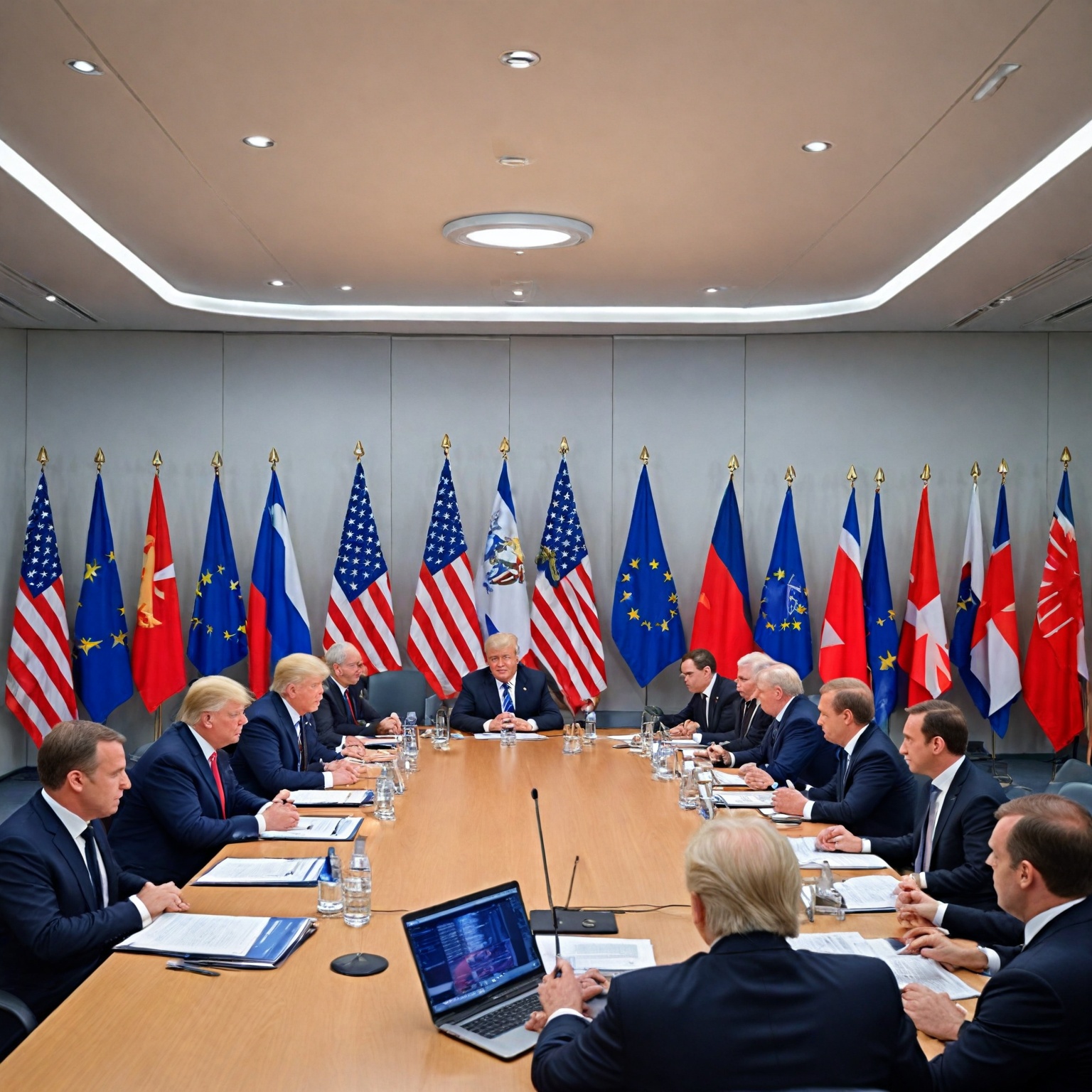
Highlights:
– Shift in Transatlantic Relations: Donald Trump's "America First" agenda radically altered the EU's relationship with the U.S., emphasizing unilateralism and protectionism, prompting the EU to reconsider its economic and security strategies amidst rising tensions. This shift led to significant disruptions in traditional diplomatic and trade frameworks.
– EU's Strategic Response: Faced with the threat of tariffs and pressure to increase military spending, the EU unified its trade policy and defense capabilities, signaling a move towards greater autonomy. The bloc also diversified partnerships to mitigate the impact of American protectionism, promoting values of multilateralism and sustainability while navigating the challenges of a strained transatlantic alliance.
– Importance of Dialogue and Cooperation: The period under review highlighted the fragility of longstanding alliances when faced with unilateral actions, emphasizing the necessity of renewed dialogue and coordination to maintain the postwar international order amidst ongoing tensions and unresolved disputes.
Summary
The first 100 days of Donald Trump’s presidency marked a watershed moment in transatlantic relations, as his administration’s “America First” agenda introduced a stark shift in the United States’ approach to foreign policy and trade with the European Union (EU). Departing from decades of post-World War II multilateralism, Trump’s policies emphasized unilateral action, protectionism, and economic nationalism, leading to significant disruptions in established diplomatic and trade frameworks. These early moves—most notably the imposition of tariffs on steel, aluminum, and other imports from the EU—triggered a wave of uncertainty and prompted the bloc to reconsider its economic and security strategies amid rising geopolitical tensions.
The EU’s response to Trump’s first 100 days combined diplomatic recalibration with a firmer stance on trade and defense. Faced with the threat of U.S. tariffs on roughly 70% of its exports and pressure to increase military spending within NATO, European leaders sought to unify their trade policy and bolster defense capabilities, signaling a push toward greater strategic autonomy. The bloc also leveraged this period to promote its values of multilateralism, human rights, and sustainability in trade, while diversifying partnerships beyond the United States to offset the impact of American protectionism.
Trump’s aggressive foreign policy approach strained the traditionally close transatlantic alliance, introducing a new era of unpredictability that extended beyond trade to issues such as NATO funding, energy security, and diplomatic coordination. Despite moments of de-escalation and later attempts at rapprochement under the Biden administration, many tensions and unresolved disputes stemming from Trump’s early policies persisted, challenging the future trajectory of EU-U.S. relations.
Overall, the first 100 days of the Trump administration reshaped the European Union’s strategic outlook, highlighting vulnerabilities in transatlantic cooperation and accelerating efforts within Europe to assert greater independence in global affairs. This period underscored the fragility of longstanding alliances when confronted with unilateral policymaking and emphasized the importance of renewed dialogue and coordination to maintain the postwar international order.
Background
Donald Trump’s presidency marked a significant shift in the United States’ approach to foreign policy and trade, particularly in its relations with the European Union (EU). The early months of his administration were characterized by a departure from traditional diplomatic norms, leading to heightened tensions and uncertainty across the Atlantic. This period saw the U.S. adopting a more unilateral and protectionist stance, which disrupted established trade networks and alliances.
Trump’s foreign policy has been interpreted by some analysts as a hard-nosed return to realpolitik, focusing primarily on the Western Hemisphere and China, while deprioritizing Europe and the Middle East. This strategy can be seen as an attempt to rebalance U.S. strategic commitments following what was perceived as overreach in previous administrations. The resulting turbulence challenged long-standing transatlantic cooperation and prompted the EU to reassess its own trade policies and diplomatic strategies.
The EU, heavily reliant on free trade and traditionally committed to multilateralism, found itself grappling with the Trump administration’s barrage of tariffs and trade duties. This shift disrupted global markets and forced the bloc to take a more assertive stance in defending its economic interests. Under pressure from member states such as France, which advocated for a more protectionist approach, and amid growing international climate activism, the EU sought to project its values on human rights and sustainability through trade policy. However, the U.S.’s retreat from multilateral trade agreements and the imposition of unilateral tariffs complicated these efforts.
The situation was further complicated by ongoing challenges within the EU itself, such as the prolonged ratification process of trade agreements exemplified by the Comprehensive Economic and Trade Agreement (CETA) with Canada. The Trump administration’s policies appeared to echo these earlier disruptions, contributing to a sense of déjà vu among EU officials familiar with previous trade negotiations and conflicts.
In response to the evolving landscape, the EU convened political meetings involving trade ministers from all member states to coordinate a unified approach. These efforts aimed to maintain pressure on the U.S. to return to negotiations and to safeguard the bloc’s economic interests in the face of unprecedented challenges posed by the Trump administration’s first 100 days. Despite a more positive diplomatic tone emerging later, tangible breakthroughs in resolving bilateral irritants remained elusive, underscoring the complexity of reestablishing a cooperative transatlantic agenda.
Key Policies and Actions During the First 100 Days
During his first 100 days in office, President Donald Trump implemented a wide array of executive orders and policies that significantly shifted the direction of U.S. domestic and foreign policy. These actions spanned areas such as trade, immigration, energy, and national security, reflecting the administration’s priorities as outlined during the campaign.
One of the most consequential areas of focus was trade policy, particularly in relation to the European Union (EU). Early in his term, Trump imposed tariffs on steel and aluminum imports, citing national security concerns under Section 232 of the Trade Expansion Act. These tariffs targeted key U.S. allies, including the EU, and covered approximately 70% of EU exports to the United States, valued at around €532 billion ($585 billion) in the previous year. In response, the EU threatened retaliatory tariffs on about $23 billion of U.S. imports, including products such as copper, pharmaceuticals, semiconductors, and timber. However, after a brief escalation, the Trump administration agreed to pause the imposition of what it termed “reciprocal” tariffs for 90 days, reducing the initially proposed 20% levy on EU goods to likely around 10%, signaling a temporary de-escalation in transatlantic trade tensions.
In addition to trade, Trump’s administration took an assertive stance on defense and NATO contributions. The president repeatedly criticized European NATO members for underfunding their defense commitments and demanded increased military spending from allies. This pressure contributed to some European countries, such as Spain, accelerating plans to meet NATO’s defense spending targets. Notably, the largest recent increases in European defense budgets occurred during Trump’s first term, influenced in part by his direct challenges to allied nations to step up their military investments.
The administration’s approach to international diplomacy also marked a departure from previous policies. Trump relied heavily on executive orders to enact swift changes, often circumventing traditional diplomatic channels and employing senior White House advisors rather than career diplomats for key foreign policy issues. This included assigning high-profile roles in sensitive areas, such as Jared Kushner’s involvement in Middle East peace efforts.
While some of Trump’s measures sparked diplomatic friction—particularly with longstanding allies in Europe—his first 100 days demonstrated a clear commitment to the “America First” agenda, emphasizing economic nationalism, strict immigration policies, and a recalibration of U.S. commitments abroad. The European Union, facing the abrupt shift, found itself compelled to respond both economically and politically, reassessing its trade strategies and defense postures in light of the new U.S. administration’s policies.
European Union’s Response to Trump’s First 100 Days
The European Union’s reaction to the initial 100 days of Donald Trump’s presidency was marked by concern, strategic recalibration, and an increased resolve to assert its own economic and defense interests in response to the unpredictability of U.S. policies. European leaders expressed apprehension over Trump’s “America First” rhetoric, which was perceived as a threat to the traditional transatlantic alliance and global stability. German Chancellor-in-waiting Friedrich Merz described the situation as “five minutes to midnight for Europe,” highlighting fears that an isolationist U.S. could prompt a geopolitical vacuum.
One significant area of concern was defense. Trump’s repeated warnings that European allies would have to face Russian threats on their own if they did not increase defense spending spurred several EU countries to commit to boosting their military capabilities. The EU even moved to loosen budget restrictions to allow member states to raise their defense expenditures, signaling a shift towards greater strategic autonomy. Prominent European officials publicly acknowledged the need for Europe to shoulder more responsibility for its security, thereby partially validating American concerns even as tensions persisted.
On the trade front, the EU faced considerable challenges due to Trump’s imposition of tariffs on a wide range of imports, including steel, aluminum, and autos. These measures, part of the “America First” agenda, triggered fears of a global trade war and prompted the EU to seek a united front in retaliation. EU countries prepared to approve counter-tariffs on approximately $28 billion worth of U.S. goods, targeting sectors heavily reliant on transatlantic exports such as agriculture and manufacturing. This response was aimed at pressuring the U.S. to enter negotiations and underscored the EU’s intent to defend its trade interests vigorously.
Despite these frictions, the EU also saw an opportunity to project itself as a “heavyweight liberal trade bloc” committed to free trade, human rights, and sustainability. With the U.S. retreating from multilateral commitments and pursuing protectionist policies, the EU moved swiftly to open new trade routes and sign free trade agreements with other partners. This strategy was seen as both a counterbalance to U.S. unilateralism and a way to offset the economic impact of American tariffs.
In the diplomatic sphere, while the Biden administration later sought to repair transatlantic relations, the initial period of the Trump presidency left unresolved irritants such as disputes over the EU’s investment agreement with China, the Nord Stream 2 pipeline, and the continuation of Section 232 tariffs. The groundwork for improved cooperation was laid, but significant policy breakthroughs remained elusive during Trump’s first 100 days.
Finally, the EU also recognized the broader geopolitical implications of the Trump administration’s policies, especially regarding China. European leaders noted the risks associated with the U.S. pivot towards confrontational trade policies and its impact on global value chains. The EU was attentive to how these dynamics could affect its own economic ties and was cautious in balancing relations with both the U.S. and China.
Impact on Transatlantic Relations
The first 100 days of Donald Trump’s presidency profoundly affected transatlantic relations, shaking the longstanding alliance between the United States and the European Union. Trump’s aggressive trade policies, notably the imposition of sweeping tariffs—10 percent on most countries, 145 percent on China, and 25 percent on steel, aluminum, and autos—disrupted global trade and cast uncertainty over the transatlantic economic partnership, which totals €1.6 trillion in two-way commerce. These measures prompted retaliatory tariffs from key trading partners such as Canada and China, escalating trade tensions and signaling a retreat from the post-World War II global trade order that the EU had championed for years.
European leaders viewed these developments with alarm, as Trump’s protectionist stance and unilateral actions unsettled markets and fractured trust. His administration’s approach undermined the EU’s efforts to promote values-based trade policies emphasizing human rights and sustainability, frustrating longstanding partners and complicating negotiations with countries like India and blocs such as Mercosur. The EU responded by seeking to diversify its trade relations, intensifying efforts to open new trade routes and conclude free trade agreements beyond the transatlantic sphere, aiming to reinforce its position as a liberal trade bloc open for business.
In the security domain, Trump’s tenure also marked a significant shift. His criticism of NATO and insistence that European allies shoulder a greater share of defense responsibilities generated tensions but also spurred increased European defense spending. Although some argue that the upward trend in European military expenditure began prior to Trump, his administration’s pressure accelerated commitments from countries such as Spain and Germany to meet NATO’s targets. However, concerns remain over the U.S. strategic pivot toward the Indo-Pacific, with the Department of Defense prioritizing naval capabilities and foreign military sales in that region over European security needs, signaling a potential deprioritization of transatlantic defense ties.
Despite these strains, the Biden administration’s subsequent “repair-and-rebuild” approach has helped ease some tensions, although unresolved issues persist, including disagreements over the EU’s investment deal with China, the Nord Stream 2 pipeline, vaccine nationalism, and lingering tariffs imposed during Trump’s era. The cumulative effect of Trump’s policies prompted European nations to reconsider their security doctrines and diplomatic strategies rapidly, as the continent grappled with uncertainties about its most critical ally. This period highlighted the fragility of transatlantic relations when confronted with unilateralism and underscored the importance of renewed cooperation to preserve the postwar international order.
Analysis and Commentary
The first 100 days of the Trump administration left the European Union (EU) grappling with unprecedented challenges and recalibrating its foreign policy stance. Under growing pressure from internal factions advocating protectionism, notably France, and amid global climate protests, the EU had been striving for years to use trade policy as a means to project its core values of human rights and sustainability. However, this approach often frustrated key partners such as India, Indonesia, and the South American Mercosur bloc. The Trump administration’s aggressive unilateral trade measures, marked by sweeping tariffs and a protectionist “America First” stance, disrupted global markets and trade networks, compelling the EU to swiftly position itself as the preeminent liberal trade bloc committed to openness and multilateralism.
Rather than outright condemnation, some European officials saw a more pragmatic path forward by encouraging NATO members to fulfill their defense commitments. This stance was publicly supported at forums like the Munich Security Conference by leaders such as German Defense Minister Boris Pistorius and British Shadow Foreign Secretary David Lammy, who validated American security concerns while emphasizing the need for Europe to increase its defense efforts. This approach reflects a nuanced recognition of the complex transatlantic relationship, where cooperation remains vital despite tensions.
The EU’s response to Trump’s policies also involved strategic diplomacy. Ahead of an EU-wide political meeting in Luxembourg, trade ministers from all 27 member states convened to assess the impact of the U.S. tariffs and to coordinate a collective response aimed at maintaining pressure for negotiations. This collective action underscores the EU’s commitment to unity and multilateral engagement in the face of unilateral U.S. actions.
Meanwhile, the geopolitical landscape was further complicated by security concerns in Europe’s eastern neighborhood. The EU and its members faced heightened anxiety over Ukraine’s survival amid ongoing Russian aggression, with European leaders recognizing the critical stakes for the continent’s future. The reluctance to extend NATO membership to Ukraine, despite U.S. advocacy, illustrated the delicate balancing act between deterring Russian expansion and managing direct confrontation—a calculus that played out amid escalating military attacks in Ukraine following a Trump-Putin call.
In the broader Middle Eastern context, the Trump administration’s foreign policy yielded notable diplomatic breakthroughs, such as the 2020 Abraham Accords, which brokered normalization agreements between Israel and several Muslim-majority countries including the United Arab Emirates, Bahrain, Sudan, and Morocco. These accords were widely regarded as significant foreign policy achievements for Trump, reshaping regional dynamics and representing a departure from traditional EU-led diplomacy in the region.
Legacy and Longer-Term Consequences
The Trump administration’s first 100 days left a profound and multifaceted impact on the European Union, reshaping transatlantic relations and prompting a reassessment of strategic priorities. One significant legacy has been the heightened sense of urgency among European policymakers to strengthen their own resilience and reduce dependence on the United States, particularly in the realms of trade and security.
Trade relations, once a cornerstone of transatlantic cooperation, faced considerable disruption. Trump’s imposition of tariffs and a more protectionist stance caused economic friction, especially with key EU trading partners. Although these tariffs—such as those affecting imports from the EU—were often described as extortionate, their overall economic impact on the EU remained manageable due to compensatory policy measures including fiscal stimulus and trade diversification efforts. The EU, under pressure from internal and external forces including a protectionist France and global climate activism, increasingly sought to leverage trade policy as a tool for projecting its values on human rights and sustainability, even while expanding its trade network beyond traditional partners like the United States and China.
In response to these shifts, the EU has adopted a more assertive stance in global trade, positioning itself as a liberal trade bloc that is open for business despite challenges in concluding new trade agreements, particularly with China. This recalibration reflects a broader trend of the EU preparing for a world where the United States may no longer play the role
The content is provided by Blake Sterling, Prime Headlines