China insists no tariff talks underway with Trump and Xi or top aides, despite U.S. claims
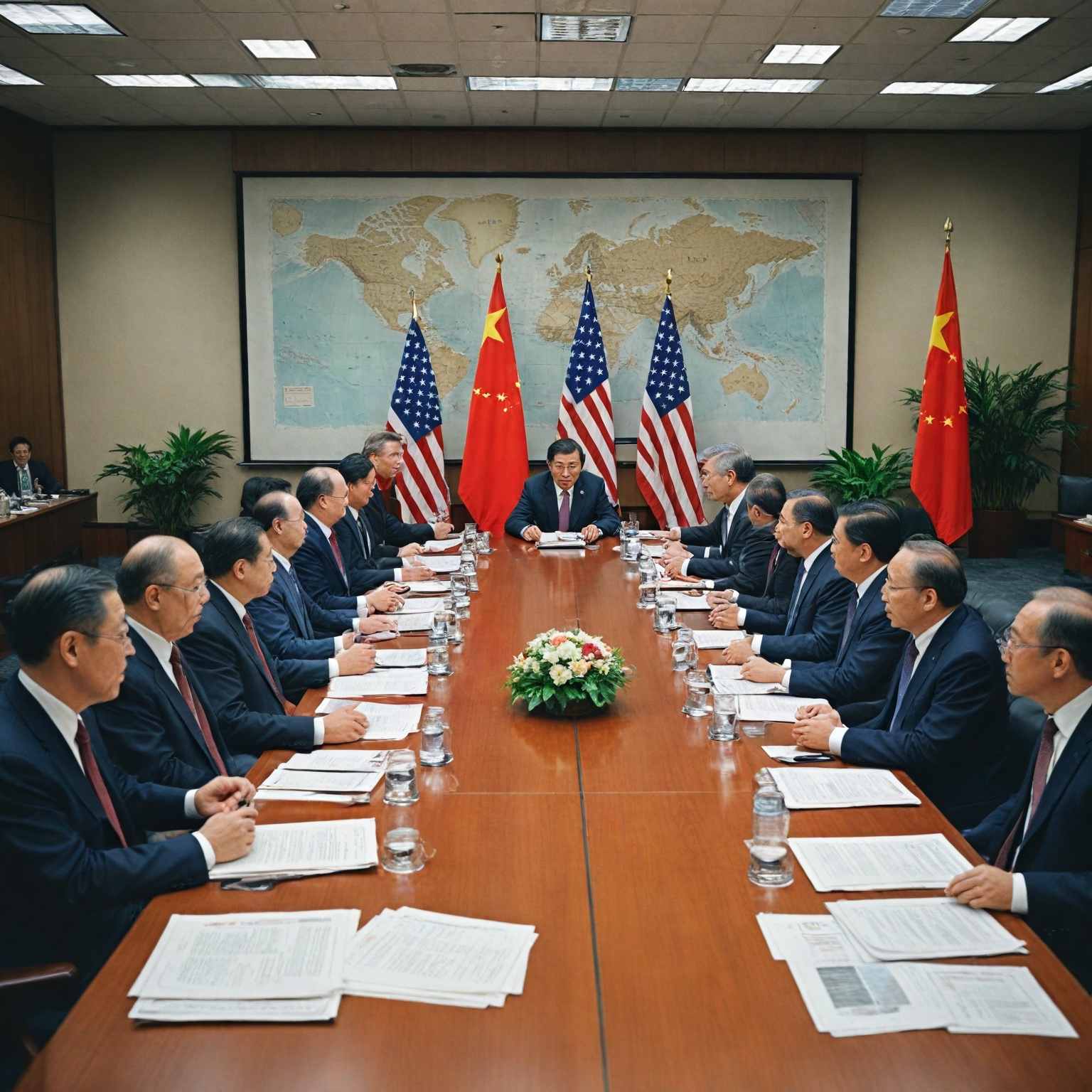
Highlights:
– Escalating Trade Tensions: The intense tariff back-and-forth between the U.S. and China, with tariffs soaring up to 145%, led to a widespread economic impact, including rising prices and supply chain disruptions, highlighting the severity of the "trade war" between the two nations.
– Divergence in Narratives: The conflicting statements and lack of agreement on trade talks between the U.S. and China underscored deep diplomatic rifts, adding complexity to resolving the trade dispute and raising concerns over the stability of relations between the world's two largest economies.
– Impact of Tariffs on Consumers: Analysts observed that tariffs increased costs for U.S. consumers, as importers absorbed duties, ultimately worsening the economic effects of the trade war. Such impacts emphasize the need for careful consideration in trade policy decisions to protect consumers and businesses.
Summary
The escalating trade tensions between the United States and China during the late 2010s and early 2020s were marked by a contentious dispute over tariffs and trade policies. Under the Trump administration, the U.S. imposed significant tariffs on Chinese imports—some reaching as high as 145%—which prompted China to respond with its own retaliatory tariffs on American goods. This tariff escalation contributed to a broader “trade war” that affected multiple sectors of both economies and generated widespread economic uncertainty, with concerns over rising consumer prices, supply chain disruptions, and deteriorating bilateral relations.
Despite public statements from President Donald Trump and his aides claiming ongoing negotiations with Chinese President Xi Jinping and his administration regarding tariff reductions, Chinese officials consistently denied that any formal or informal trade talks were underway. Representatives from China’s Foreign and Commerce Ministries repeatedly dismissed U.S. claims as baseless, emphasizing that no consultations or negotiations on tariffs had taken place, and asserting that any resolution required the U.S. to remove unilateral tariff measures first. This stark divergence in narratives highlighted deeper diplomatic rifts and contributed to the opacity and complexity surrounding the trade dispute.
China’s approach combined a firm stance against U.S. tariffs with calls for multilateral opposition to unilateral trade measures, advocating for adherence to World Trade Organization principles and strategic adjustments in its domestic economic policies. Meanwhile, the U.S. administration explored additional tariff tools, including national security justifications under Section 232, to strengthen its negotiating position. Analysts have noted that the tariffs ultimately increased costs for U.S. consumers, as importers absorbed duties rather than passing savings on, exacerbating the economic impact of the trade war.
The discord over whether tariff negotiations were genuinely taking place underscored broader tensions in U.S.-China relations during this period. While the Trump administration projected an image of active engagement and potential resolution, China’s official denials and hardline posture suggested a protracted and adversarial process. These conflicting messages complicated diplomatic efforts, fueled global economic uncertainty, and raised concerns about the long-term stability of the world’s two largest economies.
Background
The trade tensions between the United States and China escalated significantly under the Trump administration, marked by a series of tariff hikes and retaliatory measures. President Donald Trump increased tariffs on Chinese goods to as much as 145%, prompting China to respond with tariffs up to 125% on U.S. goods, along with other countermeasures. This escalation intensified the so-called “trade war” between the two largest global economies, affecting various sectors including aerospace, with China notably returning Boeing planes it had ordered from the U.S..
Despite ongoing public statements by President Trump and his aides suggesting that trade negotiations were underway, Chinese officials consistently denied that any formal trade talks had taken place. The trade war has been characterized by significant economic uncertainty, with business owners and analysts warning of rising prices, product shortages, and potential store closures as a consequence of the tariffs and retaliatory policies.
At the same time, China has maintained its stance on opening its economy further, as reaffirmed by the Central Economic Work Conference, which emphasized expanding voluntary and unilateral opening up, adjusting tariffs selectively to support domestic industrial development and technological advancement, while adhering to World Trade Organization commitments. This approach reflects China’s effort to balance external pressures with internal market needs.
The U.S. administration also explored imposing tariffs under national security grounds via Section 232, which could replace existing reciprocal tariffs, as per an order signed by President Trump on April 2. Meanwhile, research by the National Bureau of Economic Research highlighted that these tariffs did not lower import prices before duties on Chinese goods; instead, U.S. importers absorbed the additional costs, resulting in higher after-duty prices for consumers.
Throughout this period, the narrative around U.S.-China trade relations remained mixed, with multiple Trump administration officials expressing differing views on the status and nature of negotiations, adding to the complexity and opacity of the trade talks.
Incident Overview
Throughout the period of escalating trade tensions between the United States and China, conflicting reports emerged regarding the status of tariff negotiations between the two nations. U.S. President Donald Trump and some of his aides publicly indicated that trade talks and negotiations on tariffs with China were ongoing, suggesting potential progress or willingness to resolve the tariff disputes. For instance, Trump claimed that Chinese President Xi Jinping had contacted him to discuss a tariff deal and that “everything’s active” in negotiations, though details remained vague and inconsistent.
In contrast, Chinese officials consistently denied the existence of any formal or informal tariff negotiations with the U.S. The Chinese Foreign Ministry, Commerce Ministry, and other spokespeople repeatedly stated that no economic or trade talks were underway, labeling reports of such discussions as “groundless,” “fake news,” or lacking factual basis. Spokespersons such as He Yadong and Guo Jiakun emphasized China’s openness to negotiations but maintained a firm stance that any resolution must involve the removal of unilateral U.S. tariff measures rather than concessions on China’s part.
This disconnect exposed a deeper diplomatic rift. While the Trump administration portrayed an image of engagement and negotiation, Chinese officials stressed a hardline approach, criticizing U.S. tariffs as unsustainable and counterproductive. Some analysts noted that China’s denial of talks was partly a strategic move aimed at domestic and international audiences, reflecting internal policymaking processes that require consensus before high-level engagement. The absence of formal channels for direct communication between Presidents Trump and Xi was also highlighted, with U.S. requests for calls reportedly being declined by Chinese diplomats.
The tense atmosphere was further complicated by mixed signals from other countries engaged in trade discussions with the U.S., as well as internal U.S. government communications that sometimes contradicted each other. Despite these challenges, updates on tariffs and trade data continued to be issued by U.S. agencies, reflecting the ongoing economic impact of the tariffs imposed under both the Trump and Biden administrations.
Official Statements and Communications
Chinese officials have consistently denied claims made by the Trump administration regarding ongoing tariff negotiations between China and the United States. Despite President Trump’s assertions of direct communications with Chinese President Xi Jinping and progress in trade talks, Chinese authorities have rejected these reports as unfounded and labeled them “fake news.” Chinese Foreign Ministry Spokesperson Guo Jiakun explicitly stated at multiple press briefings that no consultations or negotiations on tariffs were taking place, emphasizing that “China and the U.S. have not held consultations or negotiations on the issue of tariffs” and that there have been no recent calls between the two presidents.
The Commerce Ministry also maintained a firm stance, with Spokesperson He Yadong urging the U.S. to take “seriously the rational voices from the international community and domestic sectors” by fully removing unilateral tariff measures against China. He dismissed any speculation about developments in bilateral communications as “groundless and have no factual basis,” reinforcing the message that no economic and trade negotiations were underway. This position aligns with Beijing’s broader approach of combining a willingness to negotiate with a readiness to “fight to the end” if necessary, reflecting a hardline posture amid escalating trade tensions.
Beyond public statements, China has actively communicated its position through diplomatic channels by sending formal letters to officials of other countries involved in trade disputes with the U.S. These letters advocated for multipolarity and urged nations to stand together against U.S. policies, echoing China’s criticisms and signaling a coordinated, all-of-government response to the trade conflict. The government has also strengthened departments responsible for U.S. relations, bringing in experienced officials who previously dealt with Trump’s administration to navigate the intensifying trade war.
Notably, changes within China’s commerce ministry leadership have coincided with this hardline stance. The reassignment of key figures regarded as tough negotiators, such as Wang, who had clashed with U.S. officials in past meetings, reflects Beijing’s strategic response to the trade dispute. Observers have interpreted these personnel shifts as part of China’s preparation for a protracted and intense negotiation environment. At international forums, Chinese representatives have condemned the U.S. for imposing arbitrary tariffs, further underscoring the government’s resistance to Trump’s trade measures and its insistence on resolving issues through dialogue without conceding to unilateral actions.
Reactions
Chinese officials have consistently denied that any formal negotiations or consultations on tariffs with the United States are underway, despite claims from the Trump administration suggesting otherwise. Guo Jiakun, a spokesman for China’s Foreign Ministry, stated unequivocally that “China and the U.S. have not held consultations or negotiations on the issue of tariffs,” and dismissed reports of imminent deals as untrue. Similarly, Commerce Ministry spokesman He Yadong reiterated that the United States should eliminate all “unilateral tariff measures” if it genuinely wishes to resolve the trade dispute, emphasizing that “the person who tied the bell must untie it”.
From China’s perspective, the trade war was initiated unilaterally by the U.S., and Beijing maintains that any resolution must come through dialogue without coercion or extreme pressure. The Chinese government has adopted a more assertive posture, with officials stressing China’s role as a responsible major country opposing hegemony, while simultaneously seeking to preserve the “win-win” nature of the trading relationship that had existed prior to the escalation of tariffs. At the same time, internal restructuring within China’s commerce ministry, including the promotion of key leaders like Li who openly criticized U.S. tariff actions at international forums, indicates a hardening stance during this sensitive period of U.S.-China tensions.
On the U.S. side, while President Trump and his administration have suggested that trade talks are in progress and have hinted at potential tariff reductions—possibly by as much as 50% on some Chinese imports—the White House has signaled that any significant rate cuts would not be unilateral and would depend on reciprocal moves from Beijing. However, some analysts and officials caution that these negotiations are complex and that unilateral concessions could weaken the U.S. bargaining position.
The ongoing discord has raised concerns about broader impacts, including on counternarcotics cooperation, with Chinese officials warning that additional tariffs could harm these efforts and urging the U.S. to maintain positive dynamics in bilateral cooperation. Moreover, the escalating tariff standoff has fueled global apprehension about a mutual trade embargo between the world’s two largest economies, threatening economic stability and international trade.
Analysis
The ongoing trade tensions between the United States and China have been marked by conflicting narratives regarding the status of tariff negotiations. Despite repeated claims from U.S. officials suggesting that discussions are underway or nearing a deal, Chinese government representatives have consistently denied any formal consultations or negotiations on tariffs. Spokespersons from China’s foreign and commerce ministries have emphasized that no talks have taken place and cautioned against misinformation, underscoring that dialogue must be based on equality and mutual respect.
Economists and trade experts note that China’s position requires the U.S. to roll back tariffs substantially, potentially to previous levels around 20% or lower, as a precondition for meaningful negotiations. The retaliatory tariffs imposed by China and the U.S. have resulted in near complete pass-through to consumer prices in the United States, contributing to significant economic losses estimated at $27 billion during 2018-2019 alone. These tariffs have created a de facto mutual trade embargo, raising global concerns about sustained economic disruption between the two largest economies.
Chinese officials have maintained a firm stance that the trade war was initiated by the U.S. through unilateral tariff hikes and have urged Washington to eliminate these measures to facilitate dialogue. Beijing’s approach also includes advocating for a multipolar global order and encouraging other nations to resist U.S. pressure in trade negotiations. While Beijing does not expect full concessions from the U.S., it favors a reduction in overt political signaling from Washington, such as curtailing high-level official visits and arms sales, to ease tensions.
The leadership within China’s commerce ministry, perceived as adopting a hardline stance, reflects Beijing’s broader strategy of resisting U.S. pressure amid escalating tariffs. Meanwhile, the U.S. government’s public messaging about potential talks has been met with skepticism, as experts characterize the situation as a “game of chicken” with no clear resolution in sight.
Timeline of Events
In early 2023, the United States updated its tariff data, reflecting President Biden’s increases as well as former President Trump’s proposed and retaliatory tariffs, highlighting the ongoing adjustments in trade policy between the two nations. During the spring meetings of the International Monetary Fund and World Bank Group, U.S. negotiators conducted rapid trade discussions with foreign officials, with some Trump administration officials, including Treasury Secretary Scott Bessent, expressing optimism about swift progress in trade talks.
Despite these claims, Chinese officials consistently denied that formal consultations or negotiations on tariffs were taking place. The Chinese Embassy in the U.S. explicitly stated that “China and the U.S. are NOT having any consultation or negotiation on #tariffs”. Chinese foreign ministry spokesman Guo Jiakun reiterated this position, emphasizing that no active negotiations were occurring on the tariff issue.
At the same time, Chinese authorities maintained a stance of conditional willingness to negotiate, contingent on the United States removing unilateral tariff measures. Commerce Ministry Spokesperson He Yadong called on the U.S. to “fully eliminate all unilateral tariff measures against China” if it genuinely wanted to resolve the trade dispute, reflecting China’s consistent approach throughout the period.
In response to trade tensions, the U.S. government implemented executive orders to adjust tariffs and duties further. Section 4(b) of Executive Order 14257 authorized additional tariff increases in the event of retaliatory measures by trading partners. Subsequent amendments removed duty-free treatment on certain low-value imports from China to reinforce the tariffs’ effectiveness.
Throughout this period, while the Trump administration suggested that trade negotiations were underway, business owners and analysts warned of the tangible economic consequences of the tariff war, including rising prices, product shortages, and the potential for store closures. This dynamic underscored the complex and often contradictory nature of the trade relationship during this timeframe.
The content is provided by Harper Eastwood, Prime Headlines